
There are tons of beard products available on the market, from miracle elixirs to scientific formulas, all promising incredible results for beard hair growth.
It can all feel a little bit overwhelming.
But if you’re after a simple, natural oil that’s genuinely good for your beard, look no further than the humble almond.
Sweet almond oil softens and conditions facial hair, and it’s one of the oils in our own beard oils. It won’t grow a beard you don’t have, but it will help you look after the one you do.
Let’s run through what almond oil can (and can’t) do for your beard, how to use it, and why we put it in ours.

What’s in It: Sweet almond oil is mostly oleic and linoleic fatty acids, with some vitamin E. That makes it a light, softening oil for beard hair and the skin underneath.
Moisturises and Softens: Almond oil is an emollient: it softens beard hair, makes it easier to manage and helps the skin underneath feel less dry.
Beard Growth: Almond oil helps you look after the beard you can grow. How much you can grow is down to your genetics, and no oil changes that.
Nut Allergies: Sweet almond oil comes from a tree nut. If you’re allergic to almonds, avoid it, and patch test any new oil first.
Table of Contents
What is almond oil?
Almond oil is a nutrient-rich product that’s extracted from ripe almonds.
It’s used in everything from cooking to massage and skincare, where it’s valued as an emollient: it softens and smooths skin and hair. A 2010 review of almond oil notes it has long been used for dry skin, though many of its traditional uses haven’t been tested in clinical trials.
There are also two distinct variations of almond oil that are important to recognise - sweet almond oil and bitter almond oil.
Sweet almond oil is the more common product for skincare and beard grooming and can be used as a carrier oil. Bitter almond oil is a different type of oil that can actually be toxic to ingest, so when we’re discussing almond oil for beard care, we’re talking about the sweet variety.
If you’re interested in learning more about beard oils in general, and how they can support beard health, take a look at our guide on the effectiveness of beard oil.
What’s in almond oil?
Sweet almond oil is mostly fatty acids: mainly oleic acid (an omega-9), with a smaller amount of linoleic acid (an omega-6). It also contains vitamin E, a natural antioxidant.
It isn’t a meaningful source of omega-3 or minerals, whatever you may have read elsewhere.
Those fatty acids are what make it good for beard care: they help soften hair and stop the skin underneath from drying out. What they can’t do is feed your hair follicles, which get their nutrients from your bloodstream, not from oil on the surface.
What are the benefits of sweet almond oil for beard care?
It’s highly emollient
Almond oil is ‘emollient’ - which is a fancy way of saying that it softens the skin and leaves a light layer that helps slow water loss.
That’s good news for your beard.
When the skin under your beard isn’t dry, it’s less likely to itch and flake, and a little oil on your beard hairs helps stop them feeling coarse and brittle.
It contains antioxidants
Sweet almond oil contains vitamin E, a natural antioxidant.
Almond oil has traditionally been used to soothe dry, irritated skin, but the evidence for a real anti-inflammatory effect is limited, so we won’t promise one. If your skin reacts to a beard oil, our guide to beard oil side effects explains what to look out for.
It can help reduce breakage
Almond oil can’t repair damaged hair, but it does coat and lubricate each strand, which reduces friction when you comb or brush. Less snagging means fewer broken hairs and split ends.
A strong beard is a happy beard, and sweet almond oil helps your whiskers stand up to daily combing.
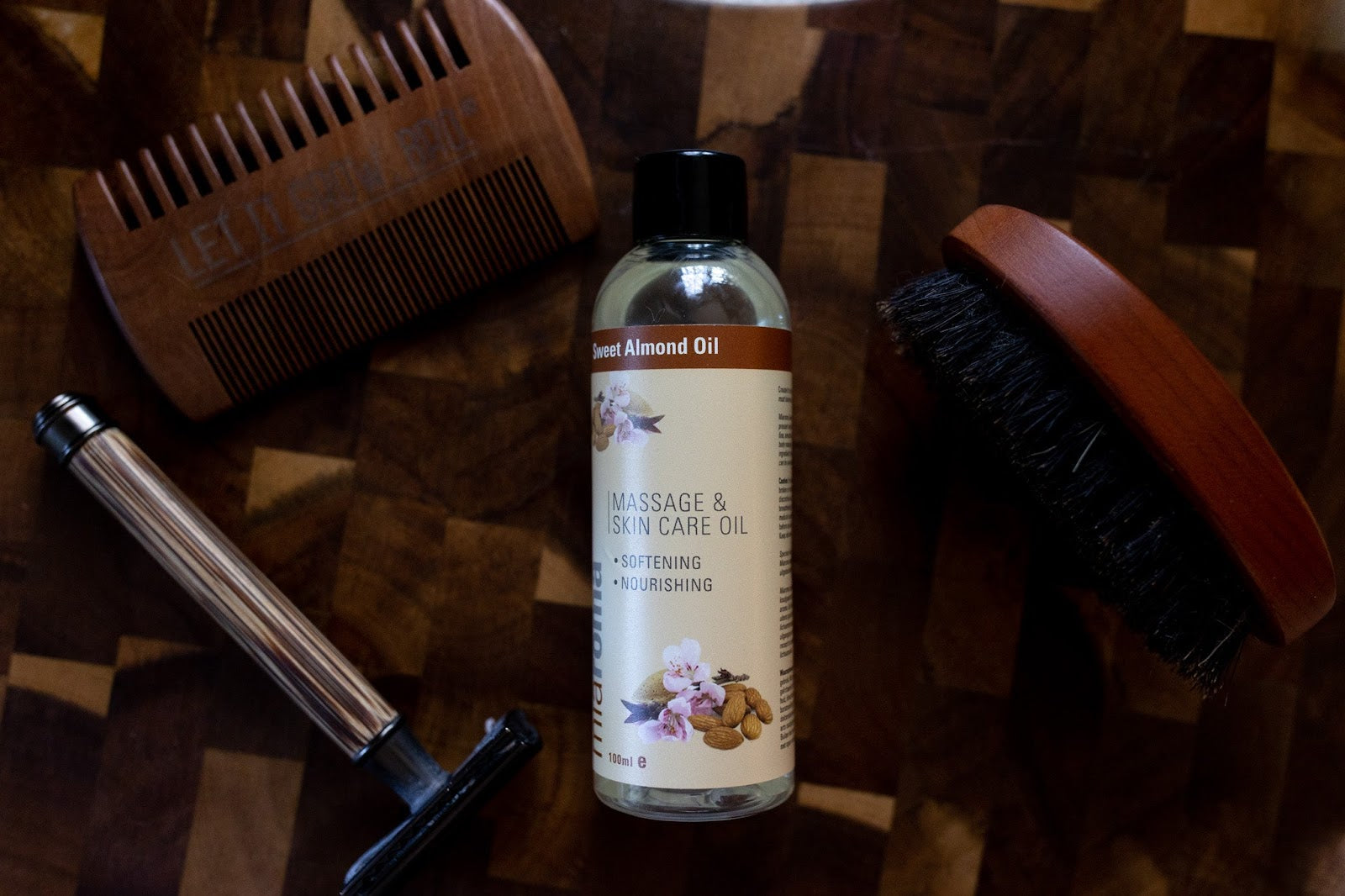
It softens your beard hair
Since almond oil helps keep moisture in your beard, it can make your beard hair much softer to the touch.
Using almond oil regularly over time will help to improve the texture of your bristles, so they’ll be looking and feeling better than ever. When your beard is moisturised, you’ll also find that softer hairs are much easier to control and style to your liking.
Can almond oil help beard growth?
So, the big question: can almond oil help your beard grow?
Now, it’s worth clarifying here that hair growth is heavily dependent on your genetics. Beard oil isn’t going to sprout a luscious beard overnight, and you’re not going to find a magic potion that transforms your follicles into hair-growth machines.
(Trust us - if that existed, we’d be selling it.)
Here’s our honest take. Beard oil helps the hair you can grow look and feel healthier. How much hair you grow is dictated by your genetics, and anyone claiming their oil will change that is selling you a lie.
What almond oil can do is keep the hair you have soft and less prone to breakage, and keep the skin underneath comfortable. If your beard is patchy, our guide to fixing a patchy beard covers what actually helps.
There are plenty of advantages to using almond oil for beard care, but there are also many alternative options you can explore as a facial hair aficionado.

Our Underdog beard oil, for example, blends sweet almond oil with jojoba, argan, rice bran and Inca Inchi oils, plus vitamin E.
Why We Use Sweet Almond Oil in Our Beard Oil
When our founder, Alex, was putting our beard oil together, he chose sweet almond oil as part of the base because it’s smooth, spreads easily and helps soften hair.
It isn’t there because of any special growth claim. It’s there to balance the other oils. Jojoba is technically a liquid wax rather than an oil (a 2021 review explains the chemistry), so it has a different feel in your beard. Argan adds richness. Sweet almond sits between them and keeps the blend light and easy to work through.
The finished feel comes from the proportions, not from any one ingredient. That’s why all our beard oils share the same base, with only the scent changing. Want to know more about the other oils? See our guides to jojoba oil and argan oil.
How to apply almond oil for beard care

Now that we’ve run through the major benefits of almond oil for beard care, let’s take a look at how you can apply beard oil to those beautiful bristles.
Prepare your beard
To prepare your beard for a healthy dose of almond oil, start by wetting it with water and combing through until you’ve removed any tangles.
Once you’ve detangled it, towel-dry your beard or let it dry before applying any oil. Oil spreads more evenly through a dry beard, so you’ll need less of it.
Apply almond oil
Apply a small number of almond oil drops to your palms. Shorter beards will only need around 2-3 drops, while a longer beard can need 6+ drops to cover it.
Spread the almond oil evenly across your fingers, and begin to massage gently into your beard hair with circular motions. Make sure that you’re reaching all corners of your beard, including the skin underneath your whiskers, to deliver full coverage.
(If you’re dealing with a lengthy beard, finish with a beard comb to work the oil through from root to tip.)
Want a step-by-step walkthrough? Our guide on how to apply beard oil covers it, and our guide on when to apply beard oil covers timing.
What are the best practices for using almond oil?
Frequency of use
To get the most out of almond oil, use it as part of a consistent grooming routine. Start with once a day. If your beard still feels dry, use it twice a day; if it feels greasy, use a little less.
Combining with other beard oils
Sweet almond oil is one of the most popular carrier oils for beard care, meaning you can combine it with various oils to unlock a range of benefits. Take a look at our guide on hemp oil or our guide to sandalwood oil, for example, to see what other oils bring to a blend.
Avoiding overuse
Almond oil is good for your beard and the skin beneath it, but you can have too much of a good thing.
Try using a modest amount of almond oil to begin with (i.e. 2-3 drops for shorter beards) and building up if you think more is needed to keep your beard moisturised.
Too much oil can leave your beard greasy and, for some people, clog pores, so don’t overdo it!
If you want to keep your beard soft and shiny, sweet almond oil is a great option, on its own in a pinch or as part of a blend.
Keen to explore more beard oil options? Explore our range of beard oils, all with sweet almond oil in the base, to find the right scent for your routine.
Almond Oil and Nut Allergies
Sweet almond oil comes from a tree nut, whether you buy it plain or as part of a beard oil.
Our beard oils contain sweet almond oil, which comes from a tree nut. If you’re allergic to almonds, don’t use them. If you have a different nut allergy, check the full ingredient list with your allergy specialist first, as we can’t confirm they’re safe for your individual allergy.
Whatever oil you use, patch test it first: put a little on a small, visible area of skin and wait to see how it reacts before using it on your beard. Reactions to our oils are extremely rare, but it’s worth doing with any new cosmetic.


Frequently Asked Questions
Is almond oil good for your beard?
Yes. Sweet almond oil is a light, easy-spreading emollient that softens beard hair and helps stop the skin underneath feeling dry. It's one of the oils in our own beard oils. It won't grow more beard, though: that's down to your genetics.
Does almond oil help beard growth?
Not directly. There's no good evidence that almond oil makes more beard hair grow. How much beard you can grow is dictated by your genetics, and anyone claiming their oil will change that is selling you a lie. What almond oil can do is keep the hair you have soft, less prone to breakage and looking healthier.
How do I use almond oil on my beard?
Start with a clean beard, then towel-dry it or let it dry. Warm 2-3 drops (short beard) or 6 or more (long beard) between your palms, massage it into the hair and the skin underneath, then comb it through. Use it once a day to start, and adjust if your beard feels dry or greasy.
Can I use plain sweet almond oil instead of beard oil?
Yes, a few drops of plain sweet almond oil will do in a pinch, as long as you're not allergic to nuts and you've patch tested it. A beard oil blends it with other oils such as jojoba and argan, which changes how it feels and spreads, and adds a scent.
Is almond oil safe if I have a nut allergy?
Sweet almond oil comes from a tree nut. Our beard oils contain it, so if you're allergic to almonds, don't use them. If you have a different nut allergy, check the full ingredient list with your allergy specialist first, as we can't confirm they're safe for your individual allergy.
What's the difference between sweet and bitter almond oil?
Sweet almond oil is the one used in skincare and beard care. Bitter almond oil comes from a different variety of almond and contains compounds that can be toxic, so it isn't the one you want for your beard.
Is mineral oil good for your beard?
Mineral oil is a refined oil made from petroleum. It's widely used in cosmetics and sits on the surface to hold moisture in, but it can feel heavier and greasier than plant oils like sweet almond or jojoba. We don't use it in our beard oils.
